
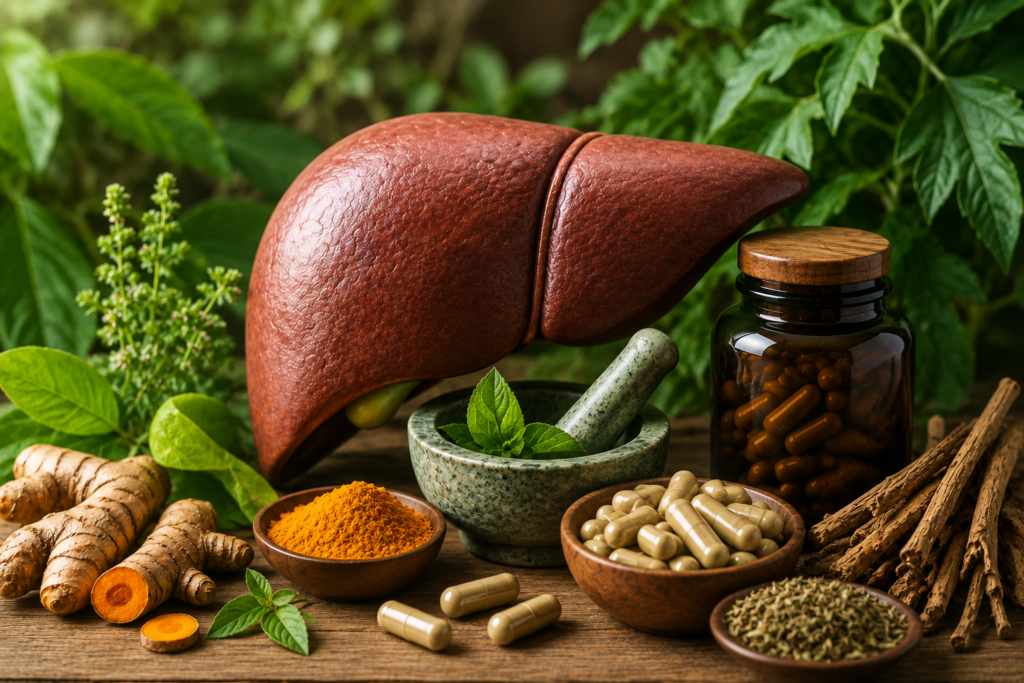
The popularity of herbal and ‘natural’ supplements has grown tremendously in the past decade. More people are turning towards natural products for better health, disease prevention, weight loss, stress relief, and general well-being. While this shift has encouraged people to pay more attention to lifestyle and preventive healthcare, it has also reinforced a common misconception- that if something is natural or herbal, it must be completely safe.
Throughout history, medicinal plants were used because they were the only therapeutic options available. Most of them have stood the test of time and are still useful today. However, centuries later, we also know that not every herb is safe under every circumstance. Modern research has shown that while some herbs have genuine therapeutic benefits, others may be ineffective, interact with medications, or even cause serious health issues for certain individuals.
How pharmaceutical and nutraceutical companies exploit this is another major concern. They start marketing potent single-drug formulations in capsule or tablet form, which are very convenient to take. They claim benefits like weight loss, immunity booster, general well-being, memory booster, mental well-being, etc which may or may not be related to that particular drug whatsoever.
It’s not that all these formulations are toxic. Their availability without a prescription, the ignorance of people who consume it, and the misconception ‘more intake, more benefit’ are the culprits here. The products available in the market might be 10 times more potent than the raw drug itself.
Even if a doctor prescribes it, they may not have complete knowledge of the product because it is new in the market and very little research has been done on it. Also, they have no guarantee that the patient will take the medication only for the given period of time. They might overuse it, and some might also recommend it to friends or family because of the belief that ‘it’s herbal, it’s completely safe’.
Herbal supplements associated with liver injury
Drug-induced liver injury (DILI) is an important cause of acute and chronic liver Herbal and dietary supplements are increasingly recognized as contributors to DILI. Although herb-induced liver injury remains relatively uncommon compared with the vast number of people using herbal products, the true incidence is likely underestimated because many cases are not recognized or reported.
Several herbal supplements have been linked to clinically significant liver injury.
TURMERIC SUPPLEMENTS
Turmeric is widely regarded as a beneficial spice with anti-inflammatory and antioxidant properties. However, recent reports have documented cases of acute hepatitis with jaundice and fatal liver injury in people who consumed an over-the-counter preparation of turmeric for more than 3 weeks. Turmeric is usually considered a herb with many health benefits. Research has shown that turmeric itself has a very low absorption rate in the human body. But these cases prove that using a more potent version by combining it with piper nigrum or pepper extract for active absorption can be harmful. https://www.ncbi.nlm.nih.gov/books/NBK548561/
GARCINIA CAMBOGIA (MALABAR TAMARIND)
It is commonly used in Asian cuisines due to its peculiar taste. Pharmaceutical companies took advantage of the widespread belief that it lowers serum cholesterol levels and is effective for weight loss and started marketing it in supplement form. One published report described acute hepatitis in a woman following Garcinia cambogia weight loss supplementation.
https://www.ncbi.nlm.nih.gov/books/NBK548087
HERBALIFE WEIGHT LOSS SUPPLEMENTS
Herbalife is a well-known, global multi-level marketing (MLM) corporation that develops and sells weight-management products, dietary supplements, and personal care items. The constituents of the various Herbalife products vary but are largely proteins, amino acids, vitamins, minerals, and selected botanicals such as aloe vera, green tea, ginseng, ginkgo, guarana, valerian, lavender, saw palmetto, echinacea, astragalus, ginger, hops, bilberry, vegetable and fruit extracts, and many others. Since its products are labelled as nutritional supplements, they are not subject to the usual efficacy and safety evaluations required for medications.
More than 50 cases of clinically apparent liver injury have been described in persons taking Herbalife products. The typical latency has ranged from 1 month to more than a year, with an average of 2 to 9 months. A doctor has shared his experience about the death of a patient following hepatic coma due to the use of the Herbalife weight-loss supplements. There might be many cases of Herbalife-induced liver injuries that go undiagnosed.
The brand name and marketing techniques are so convincing that people get attracted to it very quickly. https://www.ncbi.nlm.nih.gov/books/NBK548447/
TINISPORA (GILOY/GUDUCHI)
Tinospora cordifolia is an herbaceous climbing shrub native to India and South Asia, extracts of leaves, roots, and bark of which have been used extensively in traditional Indian (Ayurveda) medicine for a multitude of conditions including diabetes, arthritis, liver diseases, malaria, pain, urinary tract infection, and recently prevention or amelioration of COVID-19 infection. Several recent reports have documented the occurrence of clinically apparent liver injury with its long-term use.
During the COVID-19 pandemic, fueled by the suggestion that Tinospora cordifolia was an immune booster and might ameliorate or prevent clinically apparent COVID-19 infection. The cases were reported mostly from India and Thailand, but single cases were reported from Germany, Belgium, France, and the United States.
There are so many medicinal preparations in Ayurveda that contain Tinospora, and even though it is being prescribed for a short time by a certified doctor, there is a tendency among the people to continue using it for a longer period of time or self-medicate later and recommend it to their family or friends who have the same condition. This should be avoided in any case.
https://www.ncbi.nlm.nih.gov/books/NBK608429
ASHWAGANDHA
Ashwagandha is a popular Ayurvedic herb used as a general tonic to improve health, increase energy, and reduce stress and anxiety. Ashwagandha has not been implicated in causing serum enzyme elevations during therapy but recently has been implicated in cases of clinically apparent liver injury.
Cases of clinically apparent liver injury have been reported in patients taking commercial herbal products that are labelled as containing ashwagandha. Typically, the liver injury presented 2 to 12 weeks after starting ashwagandha.
First reported in 2017, the number of cases has increased since. Thus, clinically apparent liver injury attributable to ashwagandha occurs, although rarely, and its use should be avoided in patients with cirrhosis or advanced chronic liver disease.
https://www.ncbi.nlm.nih.gov/books/NBK548536
GREEN TEA EXTRACT
Green tea is a popular, widely consumed drink, and its extract is found in many herbal and dietary supplements (HDS). Green tea extract and, more rarely, ingestion of large amounts of green tea have been implicated in cases of clinically apparent acute liver injury.
The cases that have been reported were mainly due to the use of weight loss supplements that contained large amounts of green tea extract.
Green tea is an ingredient in many over-the-counter weight loss agents such as Hydroxycut, Dexatrim, Slimquick, Slimcut Fat Burner, The Right Approach, Mega Green Tea and Green Tea Fat Burner, among others, which have been implicated in causing rare instances of clinically apparent acute liver injury.
Properly diluted infusions of green tea are said to be safe to consume.
https://www.ncbi.nlm.nih.gov/books/NBK547925
These examples do not suggest that every person taking these herbs will develop liver disease. Rather, they illustrate that herbal supplements, like conventional medicines, can cause adverse effects under certain circumstances and should therefore be used responsibly.
Here are some points to keep in mind:
- Without a prescription, dangerous amounts are unmonitored.
- Some supplements lack strict medical testing for long-term safety.
- High doses build up toxins in liver cells.
- Concentrated extracts can trigger sudden, severe acute hepatitis.
- When using weight loss supplements (only with a prescription), make sure to read the ingredient list.
- People with existing liver pathologies should refrain from any kind of herbal remedies or supplementation without running it by their doctor.
- Be cautious of exaggerated claims such as “miracle cure”, “100% safe”, “no side effects,” etc.
- Hidden heavy metal contaminants cause progressive tissue damage.
- Unmonitored usage can result in irreversible liver failure.
- Some severe cases require emergency liver transplants.
A message to healthcare professionals
Patients should also be advised not to recommend herbal supplements to friends or family simply because they experienced perceived benefits. What is safe and effective for one individual may not be safe for another.
Unlike prescription medicines, many herbal and dietary supplements are marketed with limited premarketing clinical safety data. In addition, variability in manufacturing practices, contamination, adulteration, mislabeling, and differences in bioavailability may contribute to hepatotoxicity. Most supplements or herbs may not have undergone proper research or clinical drug trials. The goal is not to discourage the appropriate use of herbal medicine but to encourage its rational, evidence-based, and responsible use.
To be continued.